
Introduction
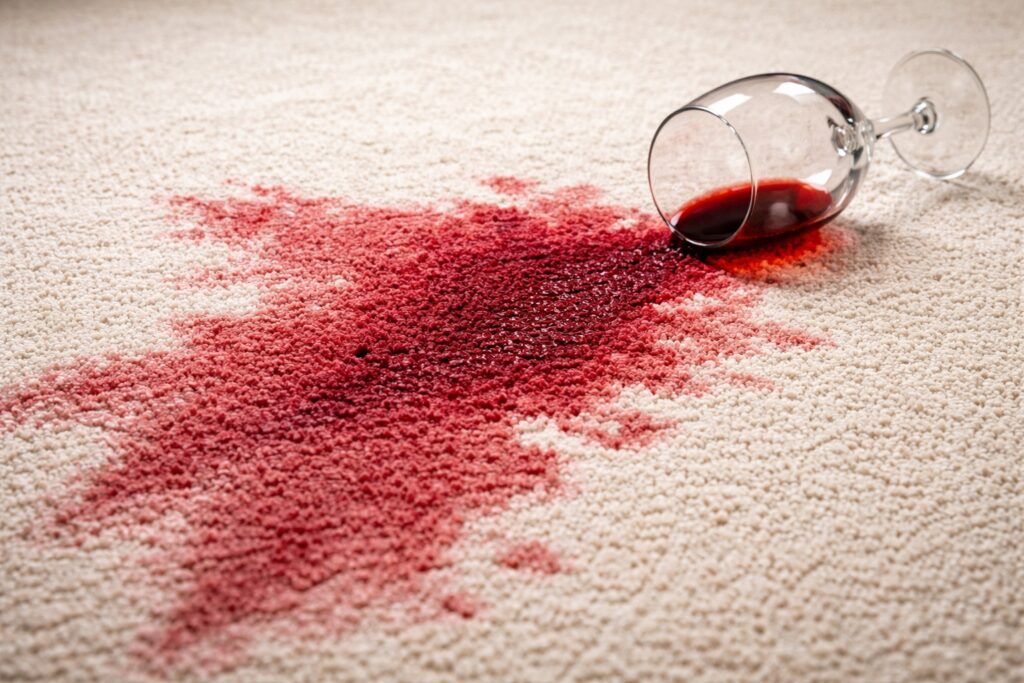
Spilling red wine on a carpet is stressful, but it does not automatically mean permanent damage. This guide explains how to remove red wine stains from carpet safely, using step‑by‑step methods that prevent the spill from spreading or soaking deeper into the fibres. The most important thing is to stay calm and avoid rubbing or scrubbing, as this can push the stain further into the carpet or damage the surface.
Handled correctly, many red wine stains can be reduced significantly or removed completely. Acting quickly, blotting carefully, and drying the area evenly afterwards gives you the best chance of preventing lasting marks or unwanted odours.
If the spill occurred during a larger water incident, you may also find it useful to read How to Dry Carpet After a Leak, which explains how moisture affects carpet backing and underlay. For a broader overview of how water, spills and damp impact carpets and soft furnishings in UK homes, see the Complete Guide to Carpet & Upholstery Damage in UK Homes.
Safety Notice
This article discusses cleaning red wine stains from carpets. Avoid oversaturating the carpet with water or cleaning products. If the area becomes overly wet or begins to smell musty, allow it to dry thoroughly. Seek professional cleaning help for large or stubborn stains.
What to Do Immediately
If the spill is fresh, the first few minutes matter most.
Blot, do not rub.
Use a clean white cloth or paper towel to gently blot up as much wine as possible. Rubbing forces the liquid deeper into the carpet fibres and backing.
Work from the outside in.
This prevents the stain from spreading outward.
Use light, steady pressure.
Press, lift, and repeat. Avoid aggressive movements.
Stop when the cloth remains mostly dry.
Over-blotting can force moisture further into the carpet layers.
If the wine has already dried, move to the section on stubborn stains below.
What You’ll Need
Most households already have these items:
- Clean white cloths or paper towels
- Cold water
- Mild dishwashing liquid, clear and non-bleach
- White vinegar
- Baking soda, optional for stubborn stains
- A small bowl
- A spoon
Avoid coloured cloths, as dye can transfer onto the carpet.
Step-by-Step Method
Take your time and follow these steps in order.
1. Lightly Dilute the Stain
Dampen a clean cloth with cold water and gently blot the stained area. This helps dilute any remaining wine.
2. Prepare a Gentle Cleaning Solution
In a small bowl, mix:
- 1 cup cold water
- ½ teaspoon mild dishwashing liquid
- ½ teaspoon white vinegar
Keep the mixture mild. Stronger solutions are not necessarily more effective.
3. Apply Sparingly
Dip a cloth into the solution and wring it out thoroughly. Gently dab the stain.
Do not pour liquid directly onto the carpet. Excess moisture can soak into the backing and prolong drying time.
4. Blot, Pause, and Assess
Blot for 20 to 30 seconds, then pause and check progress.
Switch to a clean section of cloth regularly to avoid transferring wine back onto the carpet.
Work gradually rather than trying to remove everything in one attempt.
5. Rinse Lightly
Use a separate cloth dampened with plain cold water to blot away any cleaning residue. Leaving soap behind can attract dirt later.
6. Dry the Area Properly
Place a clean, dry towel over the spot and press down firmly to absorb remaining moisture.
Allow the carpet to air dry fully before walking on it.
Good airflow helps. Open a window slightly if weather allows.
If the carpet remains damp for longer than expected, reviewing How long does carpet take to dry after a leak in the UK? can help you understand typical drying times.
If the Stain Is Old or Stubborn
Some stains will not lift fully on the first attempt.
You can try a baking soda lift:
After cleaning, sprinkle baking soda over the slightly damp area. Leave it undisturbed until completely dry, which may take several hours. Then vacuum thoroughly.
Repeat this process once only. If there is little improvement after a second attempt, further cleaning may risk damaging the fibres.
Older stains often fade rather than disappear entirely, which is normal.
If the area later develops a musty smell, it may be helpful to read Why does carpet smell damp even after drying?, which explains how residual moisture can linger beneath the surface.
If the carpet is wool, high-value, or the stain is large and deeply set, professional cleaning may be a safer option.
Common Mistakes to Avoid
- Scrubbing or rubbing aggressively
- Using hot water, which can set the stain
- Pouring cleaner directly onto the carpet
- Using bleach or ammonia
- Mixing different cleaning products
These actions can permanently damage carpet fibres or weaken the backing.
Safety Tips and When to Stop
Always test any cleaning solution on an inconspicuous area first.
Stop immediately if:
- The colour begins to spread
- The carpet texture becomes rough or fuzzy
- Dye transfers onto your cloth
Ventilate the room when using vinegar, even in small amounts.
Keep pets and children away until the area is completely dry.
If something feels wrong, pause and reassess rather than continuing.
When to Call a Professional
If you notice significant damp, mould, water damage, structural movement, electrical issues, gas appliance problems, or anything that affects the safety or stability of your home, it’s important to speak with a qualified professional. This website offers general guidance only and cannot assess individual properties. Avoid disturbing damaged, wet, or unstable materials, and do not attempt repairs involving structural elements, electrics, or gas systems. For insurance or legal questions, always check your policy documents or seek advice from a qualified adviser.
In‑depth guide: Our Complete Guide to Carpet and Upholstery Water Damage, Stains and Odours in the UK
Final Thoughts
Most red wine stains look worse than they are in the first few minutes. Acting calmly, blotting carefully, and avoiding excess moisture gives you the best chance of success.
Careful early action usually prevents a small accident from becoming a longer-term problem.
Frequently Asked Questions
Can white wine remove red wine stains?
It may dilute a fresh spill temporarily, but results are inconsistent and it is not recommended for carpet treatment.
Is this method safe for wool carpets?
Wool is delicate. Use minimal liquid, blot gently, and stop early if you notice fibre distortion.
How long does it take to see results?
The stain may appear lighter once the carpet is fully dry. Final results are usually clear within a few hours.
Can I use a commercial carpet stain remover instead?
Only if it is suitable for your carpet type and you have carried out a spot test first.
What if there is still a faint mark?
A light shadow can remain after deep staining. If the mark does not improve after careful repeat treatment, further cleaning may risk damage. At that stage, assessment may be sensible.