
Introduction
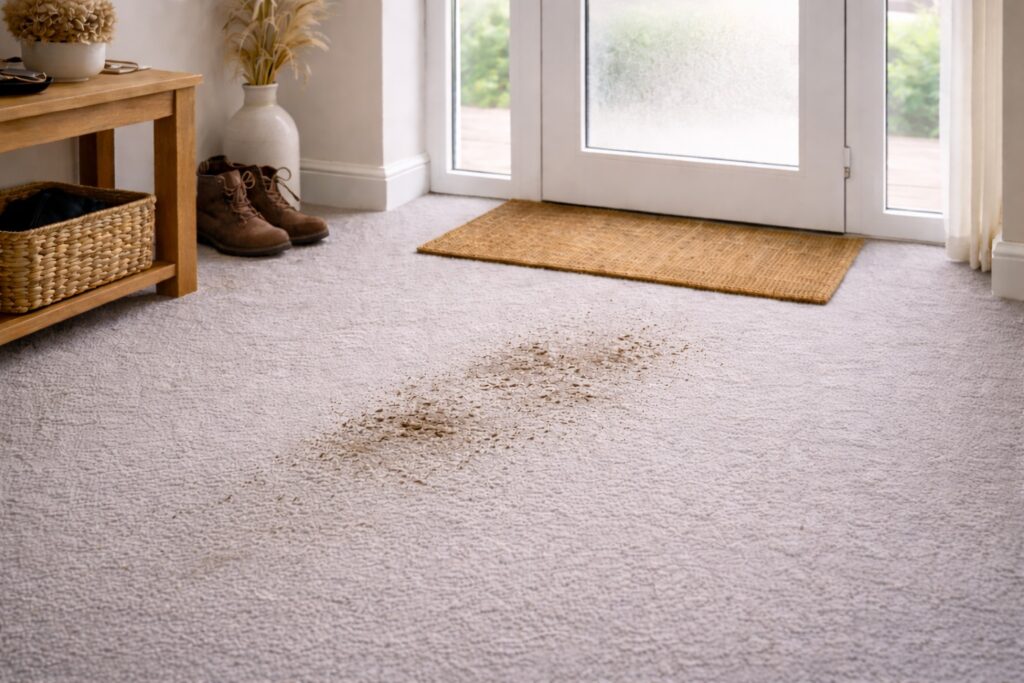
Mud and dirt marks on carpet are very common, particularly in busy UK homes during wet weather. Although they can appear stubborn, most can be removed safely with patience and a gentle approach. This guide explains how to remove mud and dirt stains from carpet.
The main risks come from scrubbing too aggressively or soaking the carpet. Both can force soil deeper into the fibres or push moisture into the underlay beneath. This guide focuses on calm, practical steps that lift surface dirt without creating new problems below.
If you are unsure how moisture behaves once it reaches deeper carpet layers, you may find How Long Can Water Sit in Carpet Before Mould Starts helpful for understanding why over-wetting should be avoided.
For a broader explanation of how water, spills and damp affect carpets and soft furnishings in UK homes, see the Complete Guide to Carpet & Upholstery Damage in UK Homes, which outlines drying behaviour, underlay concerns and when replacement may need to be considered.
Safety Notice
This article discusses cleaning methods for carpet stains. Avoid using harsh chemicals or excessive moisture, as this may damage fibres or cause dampness. If the carpet becomes overly wet or begins to smell musty, allow it to dry thoroughly. Seek professional cleaning advice for delicate or valuable carpets.
1. What to Do Immediately
With mud, patience matters more than speed.
• Let the mud dry completely.
Wet mud spreads easily and forces dirt deeper into fibres.
• Vacuum before using water.
Once dry, vacuum thoroughly to remove loose soil.
• Avoid rushing.
Trying to clean wet mud usually makes the stain larger and harder to remove later.
If the carpet is already dry and stained, begin with vacuuming.
2. What You’ll Need
No specialist products are required.
- Vacuum
- Paper towels or clean white cloths
- Cold water
- Mild dish soap, clear and non-bleach
- Optional, white vinegar or baking soda
- Optional, soft brush for very light use
Avoid coloured cloths, as dye can transfer onto the carpet.
3. Step-by-Step Cleaning Method
1) Dry Removal
Once the mud is fully dry, vacuum slowly and thoroughly. Go over the area more than once. Removing as much loose soil as possible before adding moisture prevents spreading.
2) Prepare a Gentle Cleaning Solution
In a bowl, mix:
- 1 cup cold water
- A few drops of mild dish soap
The solution should be mild and lightly mixed, not strongly soapy.
3) Blot the Stain
Dampen a cloth with the solution and wring it out well.
Gently blot the stained area, working from the outside inward.
Do not rub or scrub.
4) Lift the Moisture
Use a dry cloth or paper towel to blot up the dirty liquid.
Repeat the light blotting process if needed, keeping the carpet only slightly damp.
Over-wetting increases the risk of moisture settling into the underlay. If that happens, odours can develop later, as explained in Why does carpet smell damp even after drying.
5) Light Rinse
Dampen a clean cloth with plain cold water and blot to remove soap residue. This helps prevent sticky patches that attract future dirt.
6) Dry Properly
Press a dry towel onto the area to absorb remaining moisture.
Allow the carpet to air-dry fully before walking on it. Good airflow speeds drying.
4. Old or Ground-In Stains
Older stains are more difficult because dirt has been worked deeper into the fibres.
• Repeat the gentle process once or twice only.
Careful repetition is acceptable, but excessive cleaning can damage fibres.
• Be realistic.
Older marks may fade rather than disappear completely.
• Stop if there is no improvement.
If the stain is unchanged after a couple of careful attempts, stronger household cleaners are unlikely to help and may cause damage.
Professional carpet cleaning may be worth considering if the stain is large or heavily embedded.
5. Common Mistakes to Avoid
- Scrubbing with force
- Using hot water, which can set certain stains
- Over-wetting the carpet
- Pouring cleaner directly onto fibres
- Using bleach or harsh household chemicals
These actions can cause fibre damage, discolouration, or moisture problems beneath the surface.
6. Safety Notes
• Wool or natural fibre carpets:
Use very minimal moisture. Avoid vinegar unless you have tested it carefully first.
• Always spot test first.
Apply your cleaning mix to a hidden area and allow it to dry before treating the stain.
• Stop immediately if you notice:
– Colour transfer
– Fibre roughness or fuzzing
– The stain spreading or darkening
When in doubt, doing less is safer than doing more.
When to Call a Professional
If you notice significant damp, mould, water damage, structural movement, electrical issues, gas appliance problems, or anything that affects the safety or stability of your home, it’s important to speak with a qualified professional. This website offers general guidance only and cannot assess individual properties. Avoid disturbing damaged, wet, or unstable materials, and do not attempt repairs involving structural elements, electrics, or gas systems. For insurance or legal questions, always check your policy documents or seek advice from a qualified adviser.
In‑depth guide: Our Complete Guide to Carpet and Upholstery Water Damage, Stains and Odours in the UK
Final Thoughts
Mud and dirt stains are usually manageable with patience and restraint. Allowing the mud to dry, removing loose soil first, and using minimal moisture gives you the best chance of success.
A calm, gentle approach protects your carpet fibres and prevents deeper moisture problems. In most cases, careful cleaning is more effective than aggressive scrubbing.
7. Frequently Asked Questions
Can I clean mud stains while they are still wet?
It is better to let them dry first. Cleaning too early usually spreads the dirt.
Is vinegar safe for mud stains?
A small amount may help remove residue, but it is optional and not suitable for all carpets. Always test first.
Why does the stain look worse when wet?
Carpet fibres darken when damp. Always wait until the area is fully dry before judging the result.
Should I use a stiff brush?
No. If you use a brush at all, it should be very soft and used with light pressure only.